

The History and Evolution of Geometry Boxes
Geometry boxes, or mathematical instrument sets, have a rich history that dates back centuries. These essential academic tools have evolved significantly over time, reflecting changes in educational practices, technological advancements, and artistic needs. The origins of geometry boxes can be traced back to ancient civilizations like Greece and Egypt, where scholars and mathematicians utilized rudimentary tools for geometric calculations and architectural designs. Early tools included compasses, straightedges, and protractors made from basic materials such as wood and metal.
During the Renaissance period, the demand for precise mathematical instruments surged as the study of geometry gained prominence. This era saw the introduction of more sophisticated tools, often crafted from brass and other durable materials. These instruments were not only functional but also works of art in their own right, showcasing the craftsmanship of their makers. The geometry box, as we know it today, began to take shape during the 18th and 19th centuries with the development of standardized sets that included a variety of instruments designed for educational and professional use.
In the modern era, geometry boxes have become ubiquitous in classrooms around the world. Advances in manufacturing processes have made it possible to produce high-quality, affordable sets that cater to students, artists, engineers, and designers. Today's geometry boxes are typically made from plastic and metal, featuring ergonomic designs and precision-engineered components. Despite the changes in materials and manufacturing techniques, the core purpose of geometry boxes remains the same: to provide users with the tools they need to explore the fascinating world of geometry and unleash their creativity.
Key Components of a Geometry Box
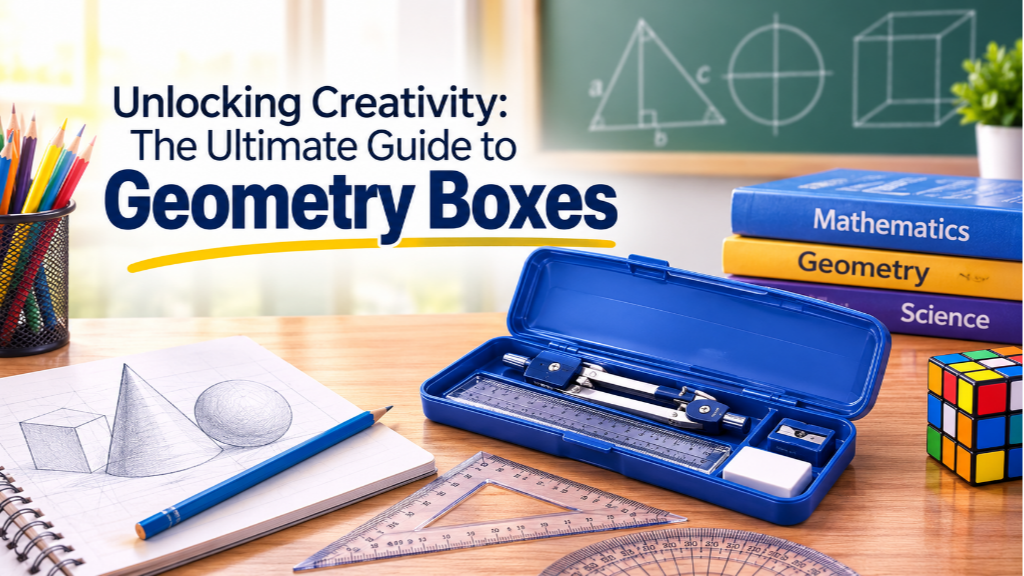
A standard geometry box contains a variety of instruments, each designed for specific tasks in geometric drawing and measurement. One of the most recognizable components is the compass, a tool used to draw circles and arcs with precision. Modern compasses often feature adjustable arms and locking mechanisms to ensure accuracy. Another essential item is the ruler, available in various lengths and materials, which provides a straight edge for drawing lines and measuring distances. Rulers are often marked with both metric and imperial units to accommodate different measurement systems.
The set square is another critical component, typically available in two forms: the 45-degree set square and the 30/60-degree set square. These tools are used to draw precise angles and perpendicular lines. Complementing the set square is the protractor, a semi-circular or circular instrument that measures angles in degrees. Protractors are indispensable for tasks that require precise angle measurement and construction. Additionally, geometry boxes often include a divider, a tool similar to a compass but with two pointed ends used for transferring measurements and comparing lengths.
Other useful items found in geometry boxes include pencils, erasers, and sharpeners. These accessories ensure that users can make precise marks and corrections as needed. Some advanced sets may also feature specialized tools such as French curves, which are used to draw smooth, non-linear shapes, and templates for creating standardized shapes and symbols. Each component of a geometry box plays a vital role in enabling users to create accurate and detailed geometric drawings, making it an indispensable tool for students, artists, and professionals alike.
Benefits of Using Geometry Boxes for Creativity
Geometry boxes offer a multitude of benefits for fostering creativity across various fields. One of the most significant advantages is their ability to facilitate precise and accurate drawing. The tools within a geometry box enable users to create complex geometric shapes and patterns with ease, providing a solid foundation for artistic and design projects. This precision is particularly valuable for artists and designers who require exact measurements and angles to bring their creative visions to life.
Another benefit of using geometry boxes is the enhancement of spatial awareness and visualization skills. By working with geometric tools, users develop a better understanding of how shapes and forms interact in space. This improved spatial intelligence is crucial for fields such as architecture, engineering, and graphic design, where the ability to visualize and manipulate three-dimensional objects is essential. Additionally, the practice of drawing and measuring geometric shapes can improve fine motor skills and hand-eye coordination, further contributing to overall creative development.
Geometry boxes also encourage problem-solving and critical thinking. The process of constructing geometric figures often involves following specific steps and applying mathematical principles. This logical approach to problem-solving can translate to other areas of life, helping individuals develop a structured and analytical mindset. Moreover, the satisfaction of creating precise and aesthetically pleasing designs can boost confidence and inspire further creative exploration. By providing the tools and framework for artistic expression, geometry boxes play a crucial role in unlocking creativity and nurturing innovative thinking.
How Geometry Boxes Enhance Learning and Problem-Solving
The use of geometry boxes in educational settings offers numerous benefits for enhancing learning and problem-solving abilities. One of the primary advantages is the hands-on, experiential learning that geometry boxes facilitate. By physically manipulating the tools and drawing geometric shapes, students gain a deeper understanding of geometric concepts and principles. This tactile approach to learning helps reinforce theoretical knowledge and makes abstract concepts more tangible and accessible.
Geometry boxes also play a crucial role in developing critical thinking and analytical skills. The process of constructing geometric figures requires careful planning, attention to detail, and the application of mathematical principles. Students must analyze the problem, determine the appropriate tools and methods, and execute the steps accurately. This systematic approach to problem-solving fosters logical reasoning and encourages students to think critically about the relationships between different geometric elements. These skills are transferable to other areas of study and everyday life, making geometry boxes valuable tools for overall intellectual development.
Moreover, geometry boxes promote collaborative learning and teamwork. Group activities that involve geometric drawing and measurement encourage students to work together, share ideas, and solve problems collectively. This collaborative environment fosters communication skills and the exchange of diverse perspectives, leading to a richer learning experience. Additionally, the use of geometry boxes can make learning more engaging and enjoyable. The satisfaction of creating precise and visually appealing designs can motivate students to explore geometric concepts further and develop a genuine interest in mathematics and related fields.
Creative Projects and Activities with Geometry Boxes
Geometry boxes open up a world of creative possibilities, offering endless opportunities for artistic and design projects. One popular activity is creating intricate geometric patterns and designs, often inspired by cultural art forms such as Islamic geometric art or Celtic knotwork. These projects involve using compasses, rulers, and set squares to construct precise shapes and repeating patterns. The process of designing and executing these patterns can be both meditative and rewarding, resulting in stunning visual compositions.
Another engaging project is the creation of geometric string art. This activity involves using a geometry box to draw a series of intersecting lines and curves on a piece of cardboard or wood, then wrapping colored threads around nails or pins placed at the intersection points. The result is a beautiful, three-dimensional artwork that showcases the interplay of geometric shapes and vibrant colors. String art is an excellent way to explore the principles of geometry while creating a visually striking piece of art.
For those interested in architecture and design, geometry boxes can be used to create detailed floor plans and architectural drawings. By using the tools to draw precise lines, angles, and measurements, aspiring architects can bring their design ideas to life on paper. This practice not only enhances technical drawing skills but also encourages creative thinking and problem-solving in the context of spatial design. Additionally, geometry boxes can be used for engineering projects, such as designing and constructing geometric models or prototypes. These activities provide a hands-on approach to learning and applying geometric principles in practical, real-world contexts.
Choosing the Right Geometry Box for Your Needs
Selecting the right geometry box depends on your specific needs and preferences. For students, a basic geometry box that includes essential tools such as a compass, ruler, set squares, and protractor is usually sufficient. These sets are often affordable and designed to meet the requirements of standard math and geometry curricula. When choosing a student geometry box, look for durable materials, clear markings, and ergonomic designs that make the tools easy to use.
Artists and designers may require more specialized geometry boxes that offer a wider range of tools and higher precision. Professional-grade sets often include additional items such as French curves, templates, and advanced compasses with interchangeable parts. These tools enable more detailed and intricate work, making them ideal for creative projects that demand precision and versatility. When selecting a geometry box for artistic purposes, consider the quality of the materials, the variety of tools included, and the overall craftsmanship.
For professionals in fields such as engineering and architecture, investing in a high-quality, comprehensive geometry box is essential. These sets typically feature precision-engineered tools made from durable materials like stainless steel or aluminum. The accuracy and reliability of the instruments are crucial for ensuring precise measurements and drawings. Additionally, professional sets often come with protective cases or pouches to keep the tools organized and secure. When choosing a geometry box for professional use, prioritize quality, precision, and durability to ensure that the tools meet the demands of your work.
Tips for Organizing and Maintaining Your Geometry Box
Proper organization and maintenance of your geometry box are essential for ensuring the longevity and functionality of the tools. One of the first steps in organizing your geometry box is to designate specific compartments or sections for each tool. Many geometry boxes come with built-in slots or holders for this purpose. Keeping each instrument in its designated place not only makes it easier to find what you need but also prevents damage from tools rubbing against each other.
Regular cleaning and maintenance are also crucial for preserving the quality of your geometry tools. Metal instruments such as compasses and dividers should be wiped down with a soft cloth to remove any dirt or residue. If your tools have moving parts, such as adjustable compasses, consider applying a small amount of lubricant to keep them operating smoothly. Plastic tools, such as rulers and set squares, can be cleaned with mild soap and water. Ensure that all tools are thoroughly dried before storing them to prevent rust and deterioration.
In addition to cleaning, it's important to regularly check your geometry tools for any signs of wear or damage. Bent or misaligned instruments can compromise the accuracy of your work, so it's essential to address any issues promptly. If a tool is no longer functioning correctly, consider replacing it with a new one to maintain the precision of your drawings. By taking the time to organize and care for your geometry box, you can ensure that your tools remain in optimal condition and continue to support your creative endeavors.
Inspiring Examples of Geometry Box Creations
The creative potential of geometry boxes is truly limitless, as demonstrated by the inspiring works of artists, designers, and engineers who have used these tools to create stunning masterpieces. One remarkable example is the intricate geometric art of Islamic architecture. The use of geometry boxes to design complex patterns and motifs has resulted in breathtaking structures adorned with mesmerizing tilework and decorative elements. These creations showcase the beauty and precision that can be achieved through geometric design.
In the realm of modern art, artists like M.C. Escher have used geometric principles to create mind-bending works that challenge perceptions of reality. Escher's use of tessellations, impossible objects, and intricate patterns demonstrates the power of geometry to create visually compelling and intellectually stimulating art. His work continues to inspire artists and designers to explore the boundaries of geometric creativity and push the limits of their imagination.
In engineering and architecture, geometry boxes have played a crucial role in the design and construction of iconic structures. The precise drawings and measurements made possible by these tools have enabled engineers to create innovative and structurally sound buildings, bridges, and other infrastructure. For example, the geometric principles used in the design of the Eiffel Tower in Paris or the Sydney Opera House in Australia highlight the intersection of art and engineering. These structures serve as testaments to the creative potential unlocked by the use of geometry boxes.
Conclusion: Embracing Creativity with Geometry Boxes
Geometry boxes are more than just academic tools; they are gateways to a world of creative possibilities. From their historical origins to their modern applications, these versatile instruments have consistently proven their value in artistic, educational, and professional contexts. By providing the means to create precise and intricate designs, geometry boxes empower individuals to explore their creativity and develop their skills in a structured and meaningful way.
The benefits of using geometry boxes extend beyond the creation of beautiful designs. They enhance learning, promote critical thinking, and foster problem-solving abilities. Whether you are a student, an artist, a designer, or a professional, a well-equipped geometry box can be an invaluable asset in your creative toolkit. By choosing the right set and maintaining it properly, you can ensure that your geometry box serves you well for years to come.
Ultimately, the true power of geometry boxes lies in their ability to inspire and unlock creativity. The precision and versatility of these tools provide a solid foundation for artistic expression and innovative thinking. As you explore the possibilities offered by your geometry box, you will discover new ways to bring your creative visions to life. Embrace the potential of geometry boxes and let your imagination soar, knowing that the tools you need to create are right at your fingertips.

Comments