

Understanding Marketplaces: Pros and Cons
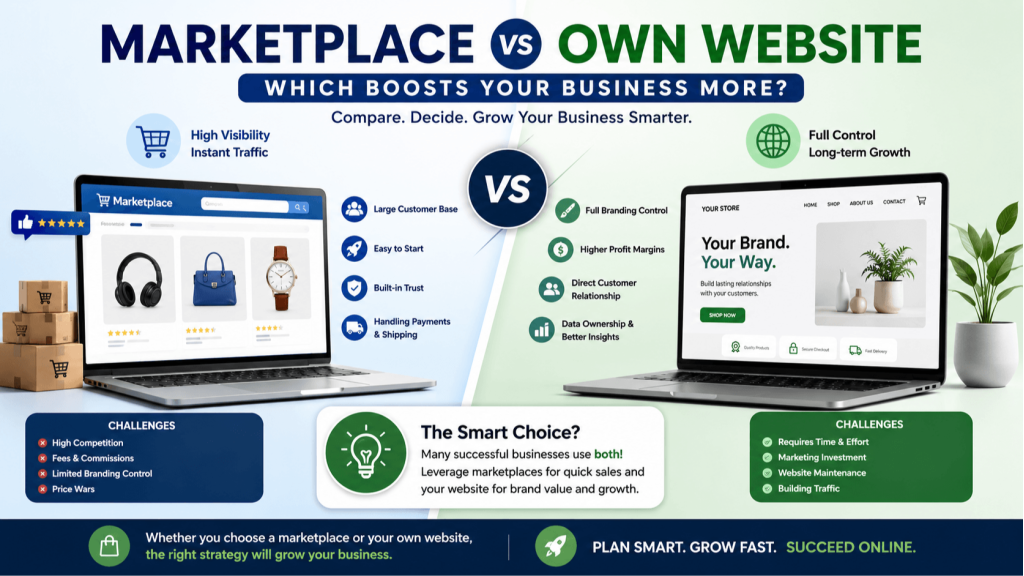
A multi-vendor marketplace solution helps businesses reach customers faster without building traffic from scratch. One of the primary advantages of using a marketplace is the immense exposure. Businesses can reach more customers online through established marketplace platforms, offering a ready-made audience for your products. This built-in customer base can be particularly appealing to new businesses that lack the resources to attract visitors on their own. Additionally, marketplaces handle many logistical aspects of online selling, such as payment processing and shipping, simplifying operations for sellers.
However, marketplaces come with their own set of challenges. One significant drawback is the high level of competition. With numerous sellers offering similar products, standing out can be difficult. This often leads to price wars, which can erode profit margins. Moreover, marketplaces charge listing fees and take a cut of each sale, which can add up over time and affect overall profitability. Sellers must carefully weigh these costs against the potential benefits of increased sales volume.
Another disadvantage is the lack of control over branding and customer experience. Marketplaces have strict guidelines and standardized templates, limiting a seller's ability to differentiate their brand. Additionally, customer interactions are mediated by the platform, which can hinder relationship building and repeat business. Sellers must navigate these constraints while striving to maintain a unique identity and foster customer loyalty.
| Feature | Marketplace | Own Website |
|---|---|---|
| Setup Cost | Low – Quick to start selling | Higher – Requires website development and hosting |
| Traffic & Visibility | Instant access to existing customers | Must build traffic through SEO and marketing |
| Brand Control | Limited branding options | Full control over branding and design |
| Customer Data | Restricted access to customer information | Full ownership of customer data |
| Customer Relationships | Managed by the marketplace | Direct communication with customers |
| Competition | High competition from similar sellers | Competition depends on your niche and SEO efforts |
| Selling Fees | Listing fees and commission charges | No marketplace commission fees |
| Marketing Responsibility | Marketplace handles much of the visibility | Business owner manages all marketing activities |
| Profit Margins | Lower due to commissions and fees | Higher potential profit margins |
| SEO Benefits | Marketplace domain authority helps listings rank | Long-term SEO benefits for your own brand |
| Trust & Credibility | Benefits from marketplace reputation | Must build trust independently |
| Scalability | Easy to launch and expand product listings | Greater flexibility for long-term growth |
| Customization | Limited customization options | Unlimited customization possibilities |
| Business Ownership | Dependent on marketplace policies | Complete ownership and control |
| Long-Term Value | Builds marketplace presence | Builds a valuable business asset |
The Advantages of Having Your Own Website
Combining a marketplace with an effective online selling strategy often produces the best results. Firstly, it provides complete control over branding and design. Unlike marketplaces, where you must adhere to predefined templates, your website allows for a customized appearance that reflects your brand's identity. This freedom extends to every aspect of the user experience, from the homepage layout to the checkout process, enabling you to create a seamless and memorable journey for your customers.
Another key advantage is the ability to build direct relationships with your customers. On your own website, you have direct access to customer data, which can be invaluable for marketing and personalization. You can tailor your communications, offer exclusive promotions, and gather feedback to enhance your offerings. This direct interaction fosters loyalty and encourages repeat business, as customers feel a stronger connection to your brand.
Additionally, owning your website means you retain all the profits from sales, without having to pay marketplace fees. While there are costs associated with website maintenance and marketing, these can often be more predictable and manageable than the variable fees imposed by marketplaces. Over time, this can lead to higher profit margins and a more sustainable business model. Furthermore, you have the flexibility to implement various monetization strategies, such as affiliate marketing, subscription services, and advertising, diversifying your revenue streams.
Cost Comparison: Marketplaces vs Own Website
When evaluating the costs associated with marketplaces versus having your own website, it's essential to consider both upfront and ongoing expenses. Marketplaces typically have lower initial costs since there is no need to invest in web development or design. Listing fees and commissions are the primary expenses, which can vary depending on the platform and the volume of sales. For instance, Amazon charges a referral fee that ranges from 6% to 45% of the sale price, depending on the product category. Additionally, there may be fees for premium services, such as enhanced visibility or advertising.
In contrast, setting up your own website involves higher upfront costs. You will need to purchase a domain name, secure web hosting, and potentially hire a web developer to create a professional site. Depending on the complexity of your website, these costs can range from a few hundred to several thousand dollars. However, once the initial setup is complete, the ongoing costs are generally lower and more predictable. Monthly expenses typically include hosting fees, which can be as low as a few dollars, and maintenance costs, which vary based on the level of support required.
Marketing costs are another crucial factor to consider. Marketplaces often provide built-in marketing tools and a ready-made audience, reducing the need for extensive advertising. However, to stand out in a crowded marketplace, you may still need to invest in paid promotions. On your own website, you will need to allocate a budget for digital marketing strategies, such as search engine optimization (SEO), pay-per-click (PPC) advertising, and social media campaigns. While these costs can add up, they also offer greater control and potentially higher returns on investment.
Traffic and Visibility: Where Do You Get More?
Traffic and visibility are critical factors in determining the success of an online business. Marketplaces inherently offer high visibility due to their vast user bases. Platforms like Amazon and eBay attract millions of visitors daily, providing an immediate audience for your products. This can be particularly advantageous for new businesses that lack an established online presence. Additionally, marketplaces invest heavily in advertising and SEO, further driving traffic to their platforms and, by extension, to your listings.
However, the high visibility comes with intense competition. With numerous sellers offering similar products, it can be challenging to stand out. Marketplaces often use algorithms to rank products, and achieving a top position can require significant effort and investment in paid promotions. Additionally, the visibility of your listings is subject to the platform's policies and changes in their algorithm, which can impact your traffic unpredictably.
In contrast, driving traffic to your own website requires more effort and investment but offers greater long-term benefits. Building an online presence through SEO, content marketing, and social media can generate consistent and targeted traffic. While it may take time to see significant results, the traffic you attract is highly relevant and more likely to convert into sales. Moreover, owning your traffic data allows for better analysis and optimization of your marketing strategies. Over time, a well-optimized website can achieve high search engine rankings, driving organic traffic and reducing reliance on paid advertising.
Control Over Branding and Customer Experience
One of the most significant advantages of having your own website is the level of control it provides over branding and customer experience. On marketplaces, your products are listed alongside thousands of others, making it difficult to create a distinct brand identity. The design and layout are standardized, limiting your ability to differentiate your store. Additionally, marketplaces often prioritize their branding over individual sellers, which can dilute your brand's presence.
On your own website, you have complete freedom to design every aspect of the user experience. From the color scheme and typography to the layout and navigation, you can create a cohesive and memorable brand identity. This extends to the content you publish, such as blog posts, videos, and product descriptions, allowing you to convey your brand's voice and values. A well-designed website can leave a lasting impression on visitors, encouraging them to return and make repeat purchases.
Moreover, controlling the customer experience allows you to implement personalized touches that enhance satisfaction and loyalty. You can offer tailored recommendations, exclusive discounts, and personalized communications based on customer behavior and preferences. This level of personalization is difficult to achieve on marketplaces, where interactions are often generic and automated. By creating a unique and engaging shopping experience, you can build stronger relationships with your customers and foster long-term loyalty.
SEO Implications: Marketplaces vs Own Website
Search engine optimization (SEO) plays a crucial role in driving organic traffic to your online store. Marketplaces have a significant advantage in this regard, as they invest heavily in SEO to ensure their platform ranks highly on search engines. As a result, product listings on marketplaces often appear at the top of search results, providing immediate visibility. This can be particularly beneficial for new businesses that lack the resources to compete with established websites in search rankings.
However, the SEO benefits of marketplaces come with limitations. While your listings may appear in search results, they are still part of a larger platform, which can dilute your brand's visibility. Additionally, the marketplace's SEO efforts primarily benefit the platform itself, rather than individual sellers. This means that your listings are competing with numerous other products for attention, making it challenging to achieve high visibility consistently.
Many businesses use an eCommerce marketplace alongside their website to generate additional traffic. By optimizing your website for relevant keywords, creating high-quality content, and building backlinks, you can improve your search engine rankings and attract targeted traffic. While it may take time to see significant results, the traffic you generate is highly relevant and more likely to convert into sales. Additionally, owning your website allows you to implement advanced SEO strategies, such as schema markup, local SEO, and technical optimizations, further enhancing your visibility.
Customer Trust and Credibility Factors
Building customer trust and credibility is essential for any online business. Marketplaces offer a level of inherent trust, as they are well-known and established platforms. Customers often feel more comfortable purchasing from a marketplace due to the familiarity and perceived security. Additionally, marketplaces have robust buyer protection policies and secure payment systems, further enhancing trust. For new businesses, leveraging the credibility of a marketplace can help overcome initial trust barriers and encourage sales.
However, the trust associated with marketplaces comes with certain limitations. While customers may trust the platform, this trust does not always extend to individual sellers. Negative experiences with other sellers can impact your credibility, as customers may view all sellers on the platform with skepticism. Additionally, the standardized nature of marketplaces can make it difficult to convey your brand's unique value proposition and build a distinct reputation.
On your own website, you have the opportunity to build trust and credibility directly with your customers. By providing detailed product information, showcasing customer reviews, and offering transparent policies, you can create a trustworthy shopping environment. Additionally, implementing secure payment systems and displaying trust badges can reassure customers of their safety. Over time, positive customer experiences and word-of-mouth referrals can enhance your brand's reputation and foster long-term loyalty.
Case Studies: Successful Businesses on Marketplaces and Their Own Websites
Examining real-life examples of successful businesses can provide valuable insights into the effectiveness of marketplaces and own websites. One notable example is Anker, a leading provider of charging technology and accessories. Anker initially gained traction by selling on Amazon, leveraging the platform's vast customer base and robust logistics network. The exposure and credibility provided by Amazon helped Anker establish itself as a trusted brand. Over time, Anker expanded to its own website, where it now offers a broader range of products and personalized customer experiences. This dual approach has allowed Anker to maximize its reach and build a strong brand presence.
Another example is Gymshark, a fitness apparel brand that initially started as an e-commerce website. Gymshark focused on building a strong online presence through social media and influencer marketing, driving traffic to its website. By offering high-quality products and engaging content, Gymshark created a loyal customer base and achieved rapid growth. While Gymshark occasionally lists products on marketplaces for additional exposure, its primary focus remains on its own website, where it can control the customer experience and maintain brand integrity.
A contrasting example is the success of individual sellers on Etsy, such as Three Bird Nest, a handmade accessories brand. Three Bird Nest gained popularity on Etsy due to its unique and high-quality products, leveraging the platform's built-in audience and marketing tools. The brand's success on Etsy allowed it to generate significant sales and build a loyal customer base. While Three Bird Nest now also operates its own website, Etsy remains a crucial sales channel, providing consistent visibility and customer acquisition.
Conclusion: Making the Right Choice for Your Business
Deciding between a marketplace and your own website is a critical decision that depends on various factors, including your business goals, resources, and industry. Marketplaces offer immediate exposure and a ready-made audience, making them an attractive option for new businesses and those looking to scale quickly. However, the high competition, fees, and lack of control over branding can limit long-term growth and profitability.
On the other hand, having your own website provides complete control over branding, customer experience, and SEO. While the initial setup and marketing efforts may require more investment and effort, the long-term benefits of owning your traffic, building direct customer relationships, and maximizing profit margins can outweigh the challenges. Additionally, a well-optimized website can achieve sustainable traffic growth and enhance your brand's credibility.
Ultimately, many successful businesses adopt a hybrid approach, leveraging the advantages of both marketplaces and their own websites. By strategically using marketplaces for exposure and customer acquisition, while focusing on their own website for branding and customer retention, businesses can maximize their reach and achieve sustainable growth. Assessing your specific needs and resources will help you make an informed decision and implement a strategy that propels your business forward.
For many businesses, the best approach is combining their own website with a trusted online marketplace in India. This allows brands to build their identity while benefiting from marketplace traffic and customer reach. Platforms like Sandhai help businesses expand their visibility, generate sales, and grow their online presence.

Share this via
Or copy link